
Pabellón de México. Expo 2010Mexico Pavilion. Expo 2010
EXPO Universal 2010
Shanghái, China
Concurso
Arquitectos / em-estudio + Tónico Visual, Gala Sanchez Renero
Aspectos Estructurales / Acero y Concreto. Ing. Domingo Uriarte Parra
Renders / Andres Ramos
Año / 2009EXPO 2010
Shanghai, China
Competition
Architects / em-estudio + Tónico Visual, Gala Sanchez Renero
Structure / Acero y Concreto. Ing. Domingo Uriarte Parra
Renders / Andres Ramos
Year / 2009
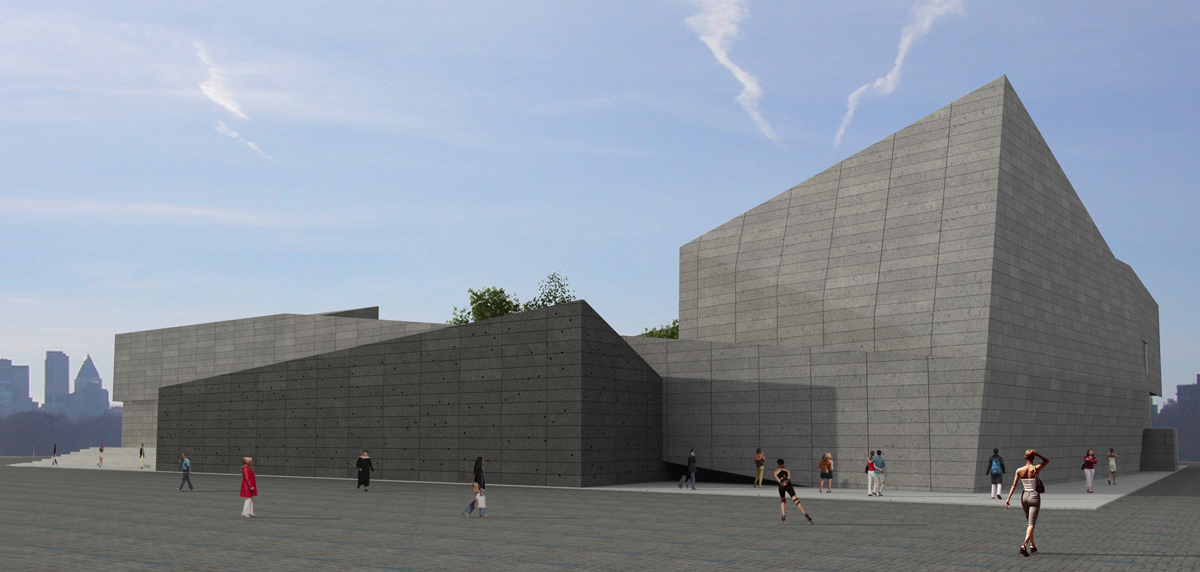
Un pabellón con una presencia tectónica-objetual que invita a ser recorrido y descubierto.
LA PIEDRA
Una estructura unificada por la forma y el material que la envuelve, el recinto negro, convirtiéndola en una gran piedra que sigue la línea de las estructuras tectónicas presentes a lo largo de la historia de nuestro país. Piedra que respira, piedra que llora, piedra que descansa, que sostiene y que guarda. Juego de piedra, que por su solidez es el caparazón del edificio, pero que al mismo tiempo envuelve de manera natural todo el color y la vida de cuanto ocurre en el interior, deja pasar la luz, respirando a través de orificios y espacios abiertos, que son también de piedra.
EL CIELO
El cielo mexicano como elemento de inspiración. El reconocimiento a sus cielos infinitos, desde el cielo de Yucatán hasta el cielo del mar de Cortés. El cielo en los cuadros del Dr. Atl, y en la fotografía de Gabriel Figueroa. La Región más transparente de Carlos Fuentes. El cielo azul también como símbolo de lo que buscamos para nuestras ciudades en el futuro. El cielo azul para todos. El edificio dialoga con el cielo, lo enmarca, lo encuadra, lo hace presente. Lo trae. Ventanas y plazas que miran al cielo. Piedra volcánica que se calienta con el sol, árboles que se mueven con el viento, agua que es reflejo de las nubes.



LA PLAZA Y EL PATIO
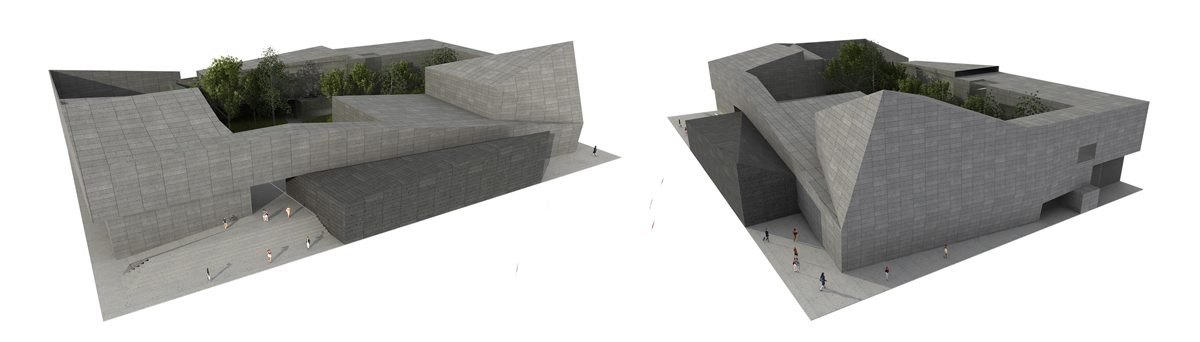
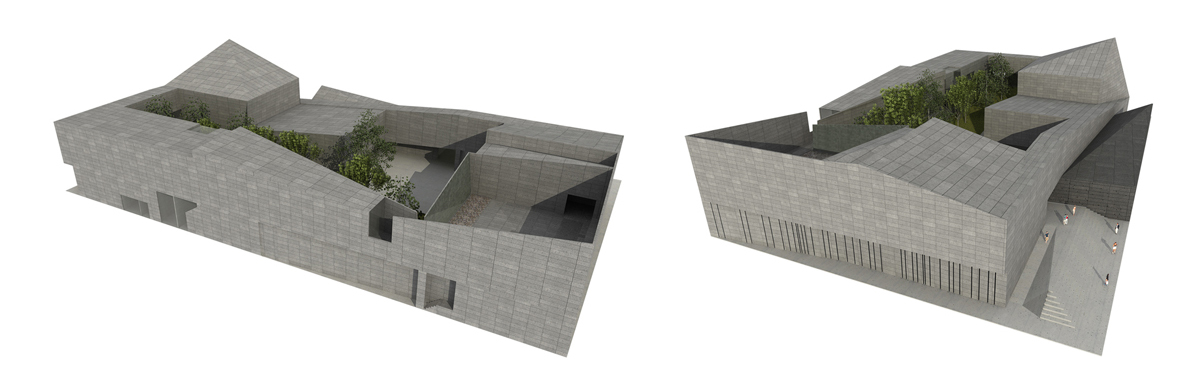
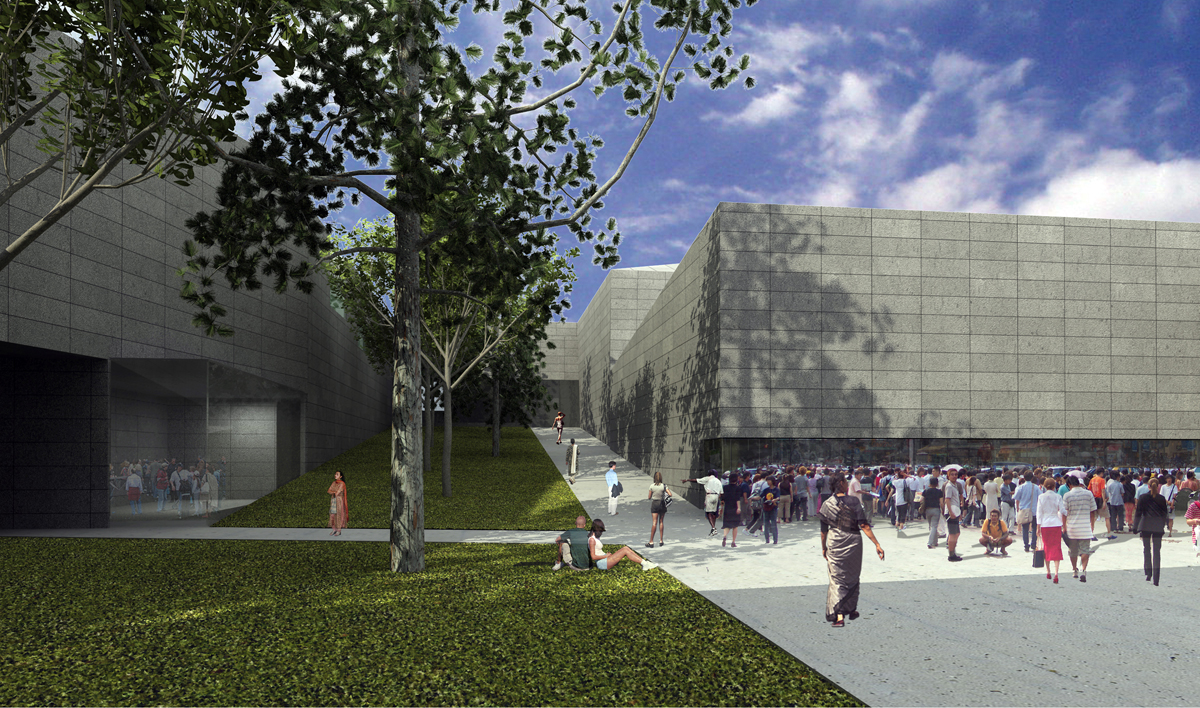
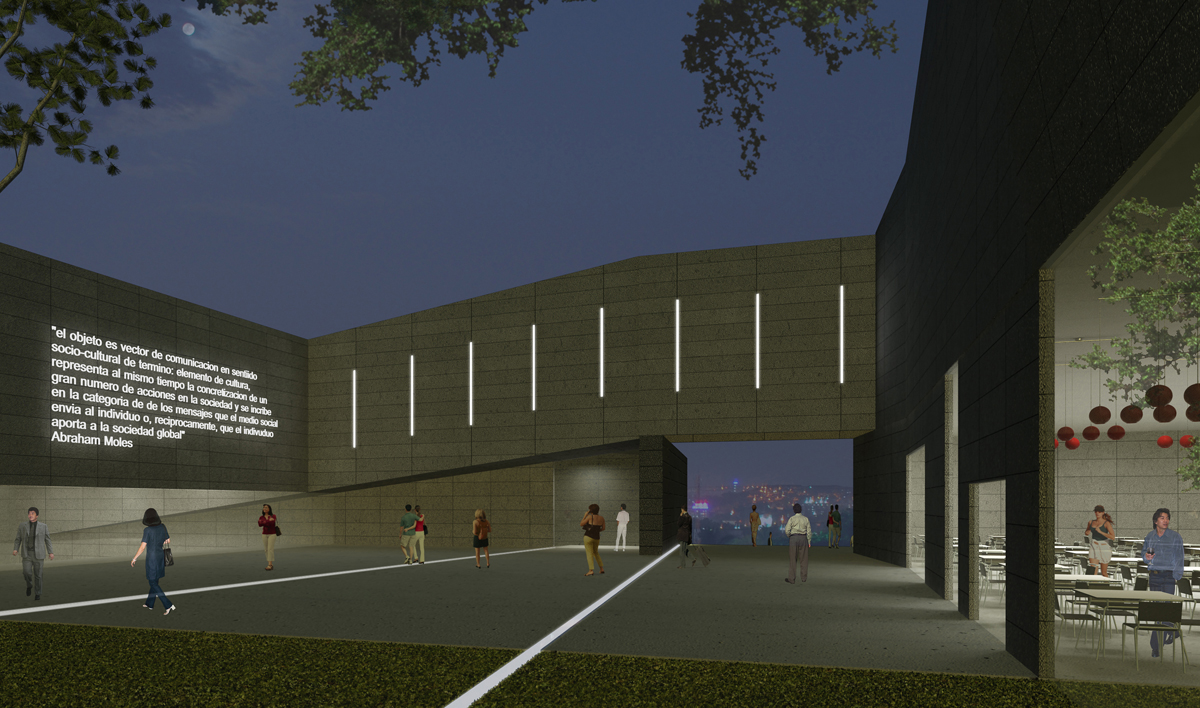
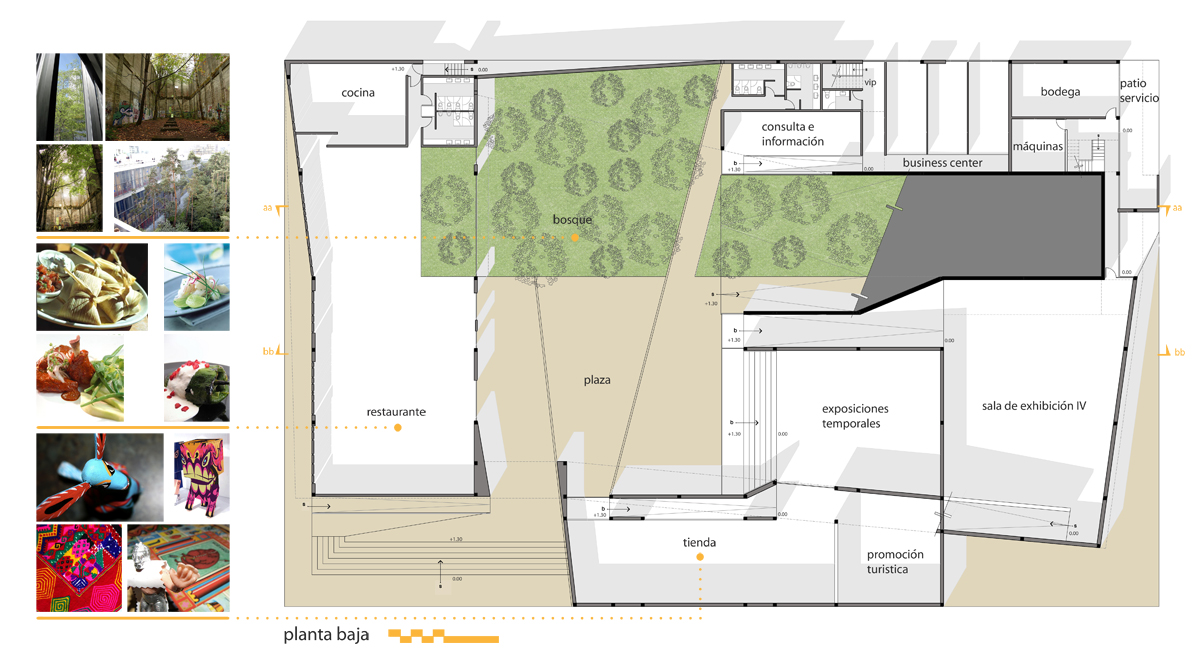
El patio que es plaza, atrio, mercado. La plaza en la que converge todo, por donde se va a otras partes. La plaza que es diversidad. En el pabellón la plaza es también el centro del que parte todo, que será recipiente de espectáculos y fiesta. La plaza que da la bienvenida a los visitantes. En el edificio, el patio es también una pausa en el recorrido de la exposición, un espacio abierto. Ambos espacios están abiertos al cielo y ambos representan también lo que se busca de la calidad de vida en las ciudades. La plaza como símbolo de la búsqueda de espacios abiertos: a la diversidad y al diálogo, a la vida pública. El patio como símbolo del respeto a la vida privada, y la búsqueda personal de cada individuo.
EL AGUA Y EL ÁRBOL
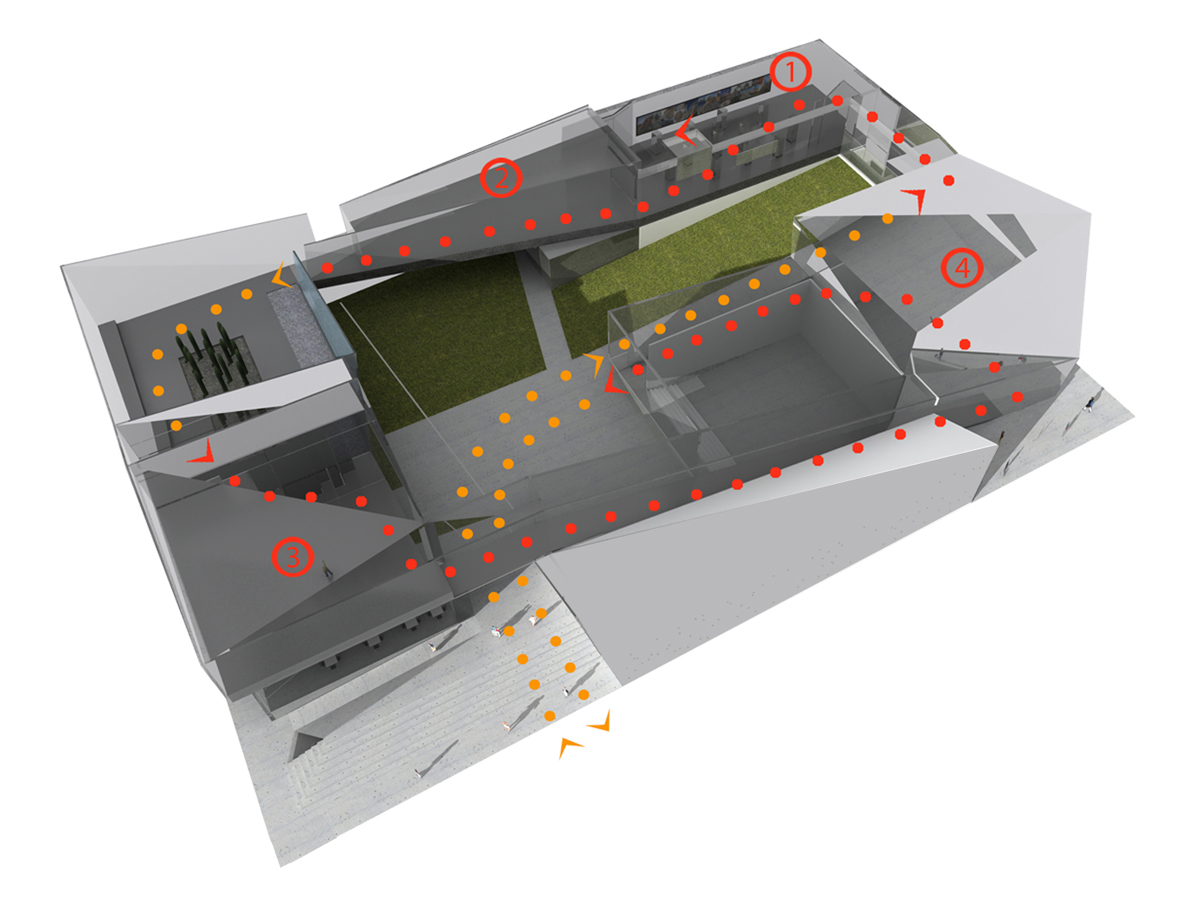
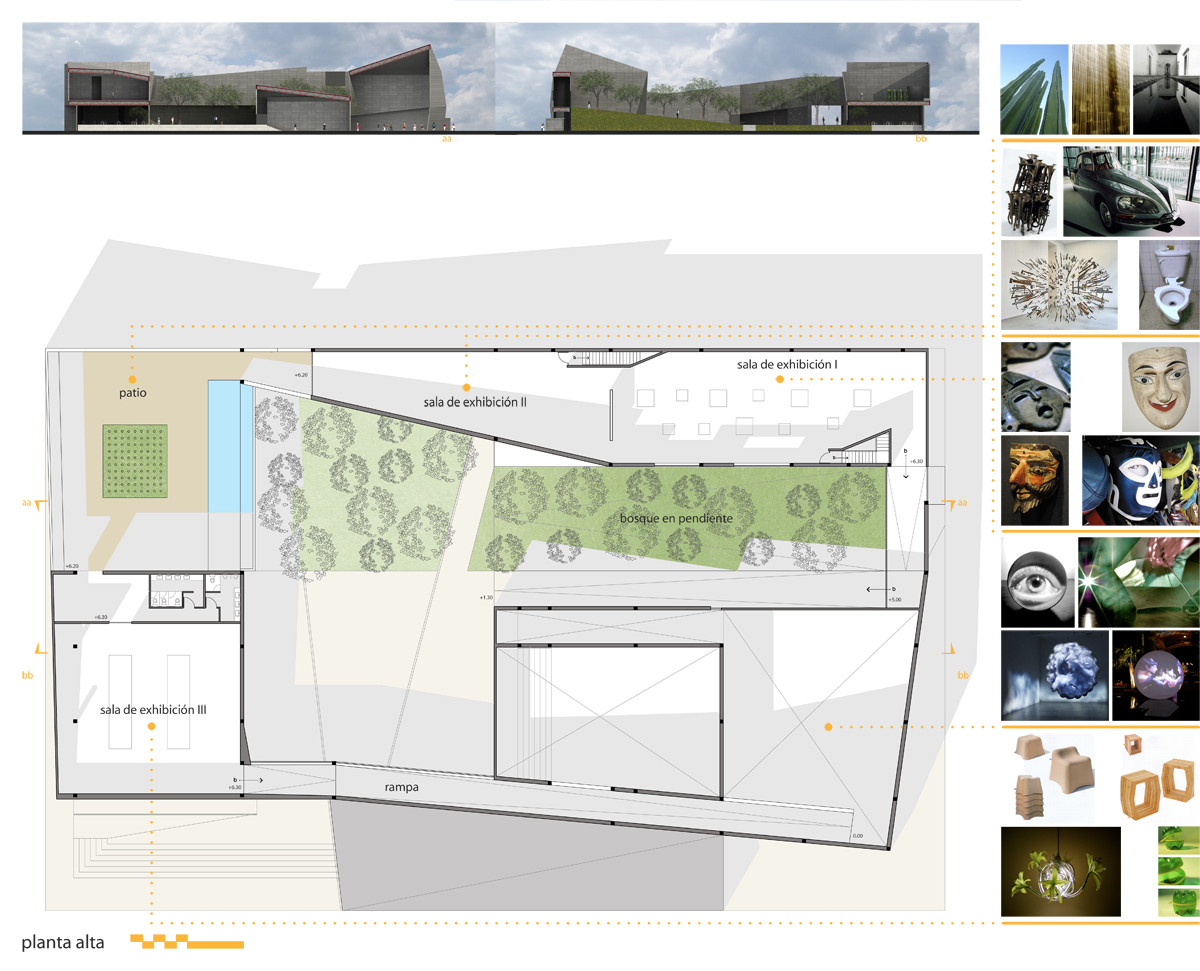
Simbolizan la riqueza natural del país y señalan la necesidad de acercar lo natural al ámbito urbano. Un frondoso bosque acompaña a los visitantes en su subida hacia el primer nivel y emerge como la vida que surge de la piedra misma. Más adelante, los visitantes se encuentran otra vez en un espacio abierto, el patio del nivel superior, en el que predomina el elemento natural diseñado a partir de una composición ordenada de cactáceas. El agua está presente, de manera sutil, mojando la piedra, reflejando el cielo.


LA EXPOSICIÓN. LOS OBJETOS DE NUESTRO AFECTO
Una exposición llena de vida y de color, de estímulos para todos los sentidos. Una exposición que habla de México. Un recorrido a lo largo de la historia de México y de su diversidad cultural a partir de una línea conductora, el objeto. La ciudad es asiento de símbolos y tradiciones en los que se fincan algunas de las bases de la nacionalidad mexicana. Recorrer su evolución a través del tiempo, nos ayuda a entenderla y conocerla más profundamente, en este contexto, el objeto es fuente fundamental para poder reconstruir los diversos aspectos de la vida cotidiana en las ciudades.
El objeto de uso cotidiano habla de nuestra realidad. Es el resultado de una reflexión creativa, tanto en su manera de resolver las necesidades por las que fueron creados, pero sobre todo por la selección de los materiales, colores y técnicas empleados en su diseño. Y es este resultado lo que los hace característicos de cada lugar y lo que buscamos rescatar con esta exhibición. Objetos que son concebidos como mensajes, con cargas simbólicas, icónicas y plásticas en una sociedad llena de tradiciones y riqueza cultural.
Utilizaremos al objeto desde el discurso de lo textual, hablando de la realidad cotidiana en la ciudad mexicana a lo largo de la historia, más adelante, del objeto descontextualizado, que funcionará como herramienta creativa de expresión artística, y finalmente, el objeto se convertirá en un recipiente de ideas para un mejor futuro.
Apelamos a la cualidad comunicativa y unificadora de los objetos de uso cotidiano al ser, aunque diferentes, universales. El auto reconocimiento y la identificación e incluso la nostalgia que provocan estos objetos en los visitantes a quienes los objetos les son familiares y reconocibles (aunque en muchos casos, completamente distintos) los convierte en creadores de significados y códigos que exaltan sus cualidades estéticas.
SALAS DE EXHIBICIÓN
PRIMERA SALA. MÉXICO DEL PASADO AL PRESENTE. Una muestra de objetos a lo largo de la historia. Nuestras ciudades están llenas de objetos de distintos tipos que conviven en un mismo entorno. Por un lado, el objeto urbano inherente de la gran ciudad; por otro lado, el objeto artesanal. En las paredes de la sala, una muestra gráfica de textos e imágenes que componen una línea del tiempo en la historia del país desde sus orígenes.
SEGUNDA SALA. EL OBJETO Y EL ARTE. El objeto es, en esencia, un producto cultural, y por tanto, el acto de significación y contextualización del mismo depende de quién, cómo y dónde se use; es esta condición cíclica del objeto como consecuencia y causa de cultura lo que permite al arte apropiarse del objeto en infinidad de formas y significados distintos.
TERCERA SALA. DEL PRESENTE AL FUTURO. Imágenes en movimiento que muestran los proyectos realizados en los últimos diez años y los que se planean a futuro, proyectos que tienen como objetivo la mejora en la vida de las ciudades en México. Al centro del espacio, dos grandes mesas de luz en las que se exhibe, la colección de “Objetos para un mejor fututo”.
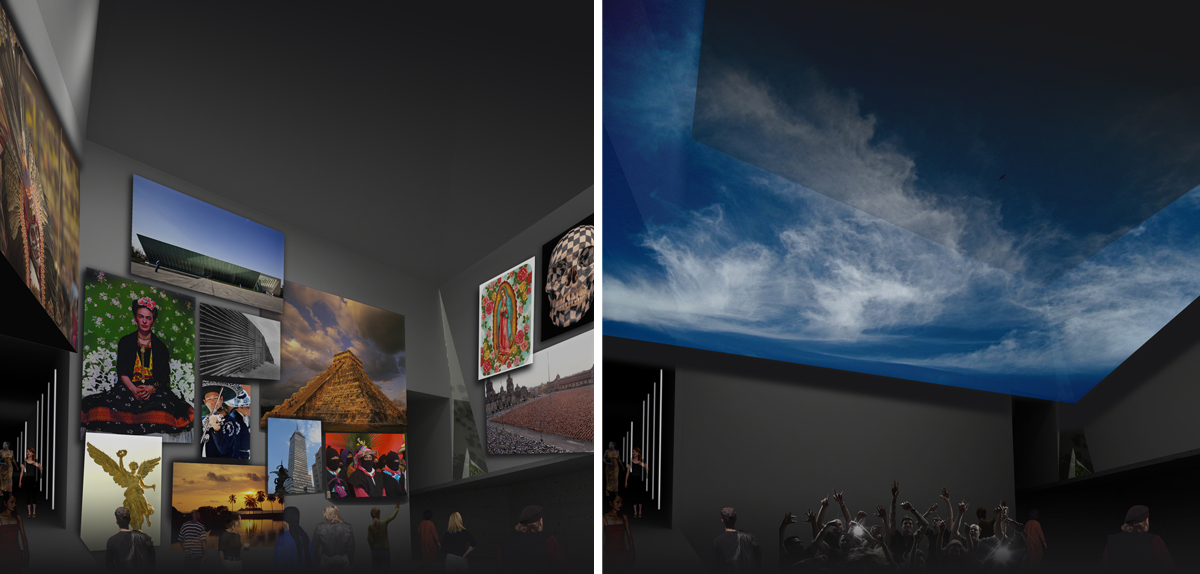
CUARTA SALA. MÉXICO ATEMPORAL. Una composición de pantallas flotantes que llegan hasta lo más alto de la sala que se combinan con proyecciones a los muros interiores de la misma,y con proyecciones en grupos de objetos que flotan en medio de la sala.Un mosaico de imágenes que muestran toda la riqueza y diversidad cultural del país. Cada determinado tiempo, este mosaico se convierte en una composición de imágenes de cielos. Por un minuto la sala entera es un cielo interior.
The building emerges as recognition that is simultaneously an exploration and a dialog.
THE STONE
A structure unified by the form and the material, the volcanic stone, turning it into a great stone that follows the line of the tectonic structures present along the history of Mexico. Stone that breathes, stone that cries, stone that rests, that supports and that guards. Rock, as foundation and as the shell of the building. Naturally embracing all the color and life of what is happening inside, letting light in, breathing through holes and open spaces. Volcanic stone present in the whole territory of the country.
THE SKY
The Mexican sky as an inspiration. The recognition of its endless skies, from Yucatan’s sky to the Sea of Cortez. The skies in the paintings of Dr. Atl, and the photography of Gabriel Figueroa. «La región más transparente» by Carlos Fuentes. The blue sky as a symbol of what we want for our cities in the future. Blue skies for everyone. The building dialogues with the sky, it frames it, it brings it in. Windows and patios that face the sky. Volcanic rock that is heated by the sun, trees moving in the wind, water that reflects the clouds.
THE PLAZA AND THE PATIO
The patio that is courtyard, square, court, market. The plaza where everything converges. The plaza which is diversity. In the pavilion, the plaza is where everything starts, the container of spectacles and shows. The place that welcomes visitors. In the building, the patio is a break, a place to rest, an open space. Both spaces are open to the sky and represent what is sought in the quality of life in cities. The plaza as a symbol of the quest for open space: a diversity and a dialogue, a public life. The patio as a symbol of respect for private life, and the personal quest of every person.
THE WATER AND THE TREE
They symbolize the natural wealth of the country and the need to bring nature to urban areas. A lush forest accompanies visitors on their way to the first level and emerge as life emerging from the stone itself. Later, visitors arrive to an open space, the patio in the upper level, where nature is present as a natural array of cacti. Water is present, subtly, wetting the stone, reflecting the sky.
THE EXHIBITION. OBJECTS OF OUR AFFECTION
An exhibition full of life and color, stimulus for all the senses. An exhibition that speaks of Mexico. A journey along Mexico’s history and cultural diversity through a conductive line, the object. The city as the recipient of symbols and traditions in which Mexican identity of today is built. Studying the evolution of objects over time, helps us to understand and know more deeply, in this context, how fundamental the objects are to reconstruct the aspects of daily life in the cities.
The everyday object speaks of our reality. It is the result of creative thinking, both by meeting the needs for which they were created, but especially because of the selection of materials, colors and techniques used in its design. And this result is what makes them unique to a specific place and what we want to portray with this exhibition. Objects that are conceived as messages with symbolic, iconic and plastic meanings in a society full of traditions and cultural richness.
The object will be portrayed from a textual meaning, showing the daily life in a Mexican city through history; afterwards, a decontextualized object, will work as a creative tool of artistic expression; and finally, the object will become a container of ideas for a better future.
We appeal to the communicative and unifying quality of everyday objects by being, though different, universal. The auto recognition and identification and even nostalgia that cause these objects in visitors to whom these objects are familiar and recognizable (though in many cases, completely different) transform them into creators of meanings and codes that exalt their aesthetic qualities.
SHOWROOMS
FIRST ROOM. MEXICO. PAST TO PRESENT. Objects along history. Our cities are filled with objects of different types that coexist in the same environment. On one hand, the urban inherent object of the big city, on the other hand, the craft object. On the walls of the room, a graphic display of texts and images that create a timeline in the country’s history since its inception.
SECOND ROOM. THE OBJECT AND ART. The object is, in essence, a cultural product, and therefore, the act of meaning and context of it depends on who, how and where it is used; it is this cyclical condition of the object as a consequence and cause of culture which allows art to appropriate objects in countless different shapes and meanings.
THIRD ROOM. PRESENT TO FUTURE. Moving images that show projects from the past ten years and projects that are planned for the future, projects aimed at improving the life of the cities in Mexico. At the center of the space, two light tables with a display of the collection of «Objects for a better Future».
FOURTH ROOM. TIMELESS MEXICO. A composition of floating screens up to the ceiling combined with projections to the room walls, and projections in groups of objects floating in the middle of the room. A mosaic of images showing the richness and cultural diversity of the country. Then, this mosaic becomes a composition of images of skies. For a minute the whole room is an inner sky.